
(1878-1935) Sources: Centennial History of Missouri
Anthony Fonda made a most creditable record as a farmer, as a lawyer and particularly as a citizen whose devotion to the welfare of the great majority is a recognized fact. A resident of Independence, he was born in Leavenworth, Kansas, his parents being Anthony Phillip and Laura D. (Wier) Fonda, the former a native of the state of New York and the latter of New Jersey. His parents became acquainted and were married in Leavenworth, Kansas. The father conducted the first wholesale grocery in Kansas City, which place was then known as Port Fonda. He was a veteran of the Civil war, having served in the Union Army, enlisting in Michigan as a member of a regiment of that state. In the course of the war, he (the father) was captured by his own brother, Cornelius Jesse Fonda, who was with the Confederate forces, and who later died in the Battle of Perryville, Kentucky.
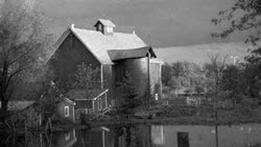
A. P. Fonda (the son) acquired his early education in the public schools of Kansas City, Missouri, following the removal of the family from Leavenworth, and later attended the Marmaduke Military Academy at Sweet Springs, Missouri. He next became a student in the Case School of Applied Sciences at Cleveland, Ohio, and afterward attended Union College at Schenectady, New York. About this time the Spanish-American war began and he attempted to join the army but because of some physical defects was refused. He therefore represented the Jacob Dold Packing Company of Buffalo, New York, and Kansas City, Missouri, in Cuba, and following the close of hostilities Mr. Fonda purchased a farm called Avondale, in Clay county, a tract of eighty acres, for which he paid ten hundred and sixty dollars. He cultivated and improved this farm for a period of three years, largely raising lima beans and sweet potatoes. When thus engaged he studied law in the offices of Leo Bock and Judge J. V. C. Carnes and in 1903 was admitted to the bar. About this time he sold his eighty acre farm for three hundred dollars per acre. In the year of his admission to the bar he was appointed claim agent of the P. & K. C. Railway Company, which position he filled for about eighteen months and then concentrated his efforts and attention upon the land and real estate business, specializing in taxes.
In 1916, Mr. Fonda joined the National Security League, a pro-war political activism group, and had the credit of capturing the first German spy that was secured in this country. This was Antone Havercamp, who was caught in the rear of the criminal court building of Kansas City and who had in his possession about three and a half bushels of bomb parts. Through the efforts of Mr. Fonda he was incarcerated at Fort Riley. (see
Clippings
for more details) Mr. Fonda was the chairman of the United States labor board of Jackson county, Missouri, and was also United States food commissioner for the county. He was a most active worker in support of the government throughout the war period. He had charge of the Liberty loan drive for Independence and raised four hundred and ten thousand dollars, this being twenty thousand dollars above the quota. The entire expense of the drive, including the raising of this amount, was only seventy dollars and thirty-five cents.
In Independence, in 1910, Mr. Fonda was married to Miss Corm Homan (Cora Hanington), a representative of a farming family of Carroll county, Missouri, and they had one daughter, Nadine. Their religious faith was that of the Baptist church and Mr. Fonda's Christianity was a part of his daily life, being manifest in all of his relations with his fellowmen. He was interested in the welfare of the youth of the country and was the president of the Boy Scouts organization of Independence. He greatly enjoys being with the boys, frequently had them at his home and goes with them on all the trips which they take. His political allegiance was given to the democratic party. He was a man of unquestioned loyalty to any cause which he believes to be right. He had made a remarkable record as food commissioner, in which his activities have shown that he had labored untiringly for the interests of the people. He had fought hard against measures that have been put over in Washington and a few more such men as Mr. Fonda would have been able to save millions to the people of the United States. He wrote in the plainest terms to the food administration at the capital that they were allowing the people to be robbed of millions by the sugar trust and they sent a man on from Washington to see him about the matter. He refused to take back what he wrote and dared them to remove him from office as food commissioner. The righteousness and justice of his course are indicated in the fact that he was retained in the position.
Sources and references
- Centennial History of Missouri: http://www.accessgenealogy.com/scripts/data/database.cgi?file=Data&report=SingleArticle&ArticleID=0000330
- Clippings: /clippings.htm